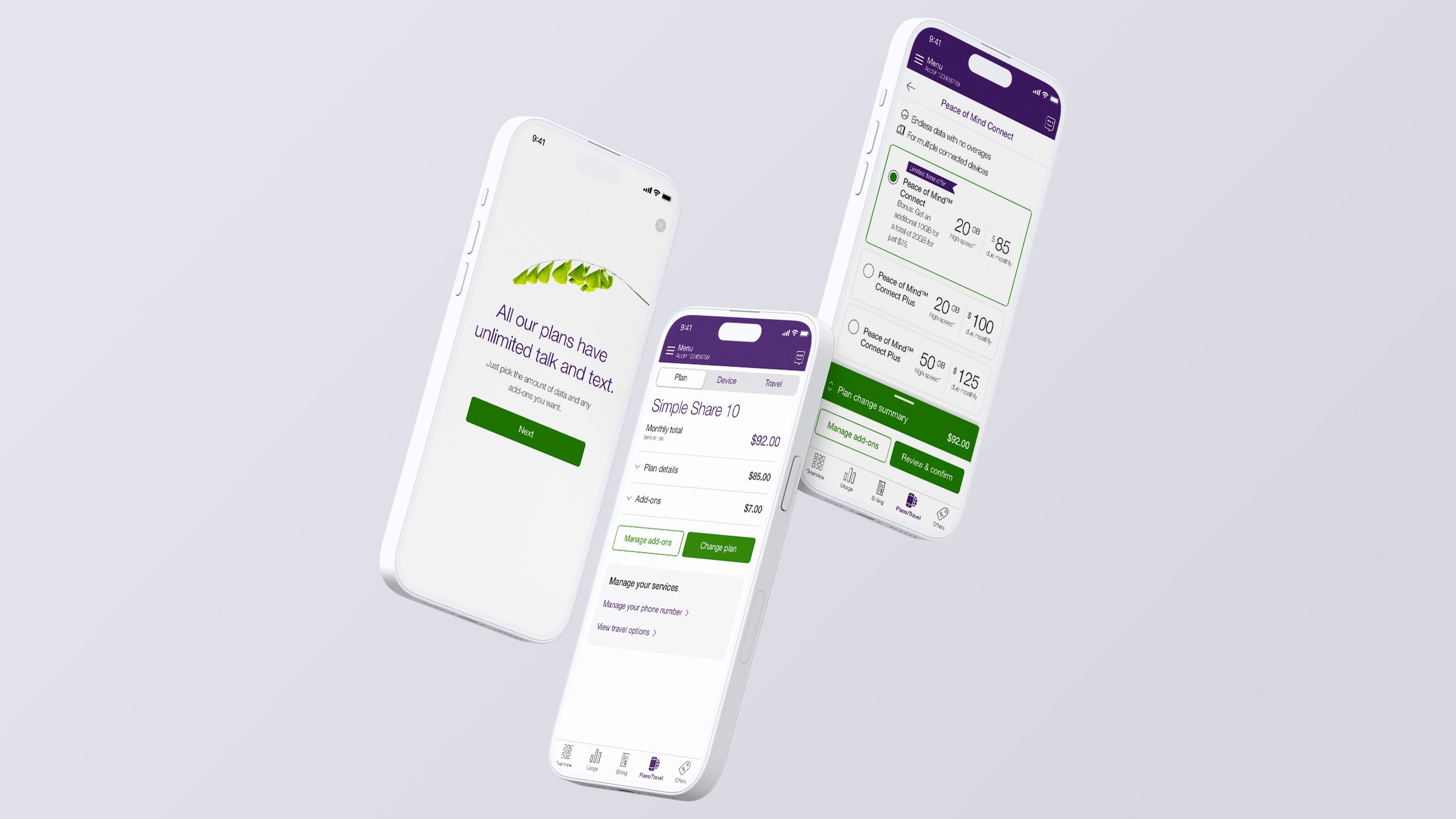
About the project
As My TELUS grew, users kept asking for one thing: the ability to change their rate plans in the app, just like they could on the web. So we set out to build it.
Our goal was to launch within 6 months with a 12% digital adoption rate and 65% user satisfaction.
Client
TELUS Digital
Services
Product Design
Role
Lead Product Designer
Year
2020
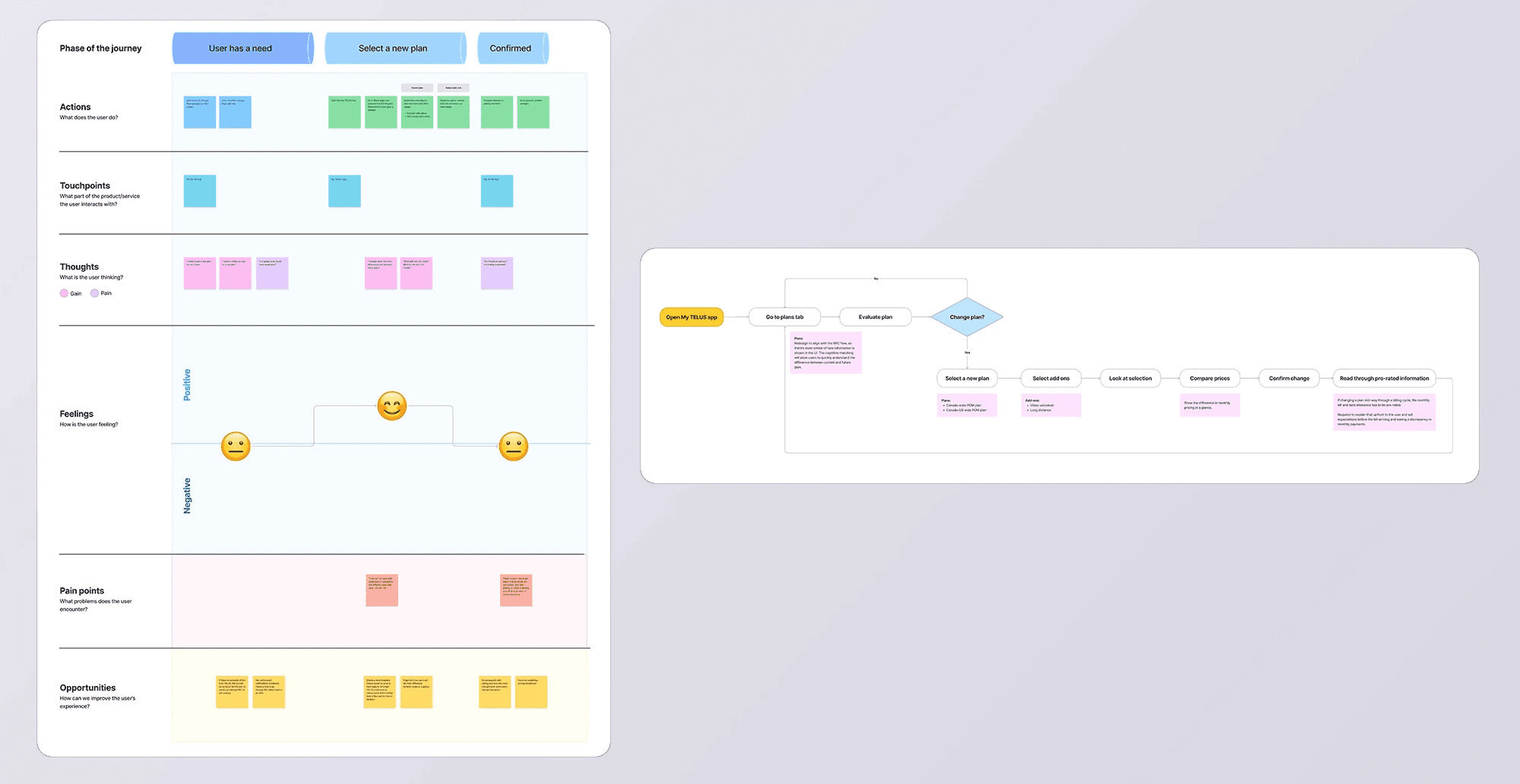
We had a lot of questions about how people actually dealt with rate plan changes:
What made the in-store, web, and call center experiences work (or not work)?
What kept coming up in complaints and support questions?
How were people already navigating the app?
What info did they need to feel confident choosing a plan?
The problems we uncovered
Distrust around pricing: Users couldn't make sense of proration calculations, especially when its mid-cycle. The lack of clarity made them worry about surprise charges.
Hard to compare plans: Subtle differences between plans weren't obvious at a glance.
Too much at once: Users were overwhelmed by walls of information and struggled to find what actually mattered to them.
What did we learn?
Users felt like complexity was intentional and that TELUS was making things confusing on purpose.
People wanted guidance for such a big decision, the kind of hand-holding they'd get talking to someone in-store or on the phone.
Show exactly how proration works, showing specific dates and charges that impact the user.
Use plain language and add context where it counts.
Make pricing crystal clear at every step.
Design it like a shopping cart, introducing a more familiar and straightforward experience to our users.
We started with quick wireframes to test our approach, then refined them into hi-fidelity designs that balanced simplicity with the detail users needed.
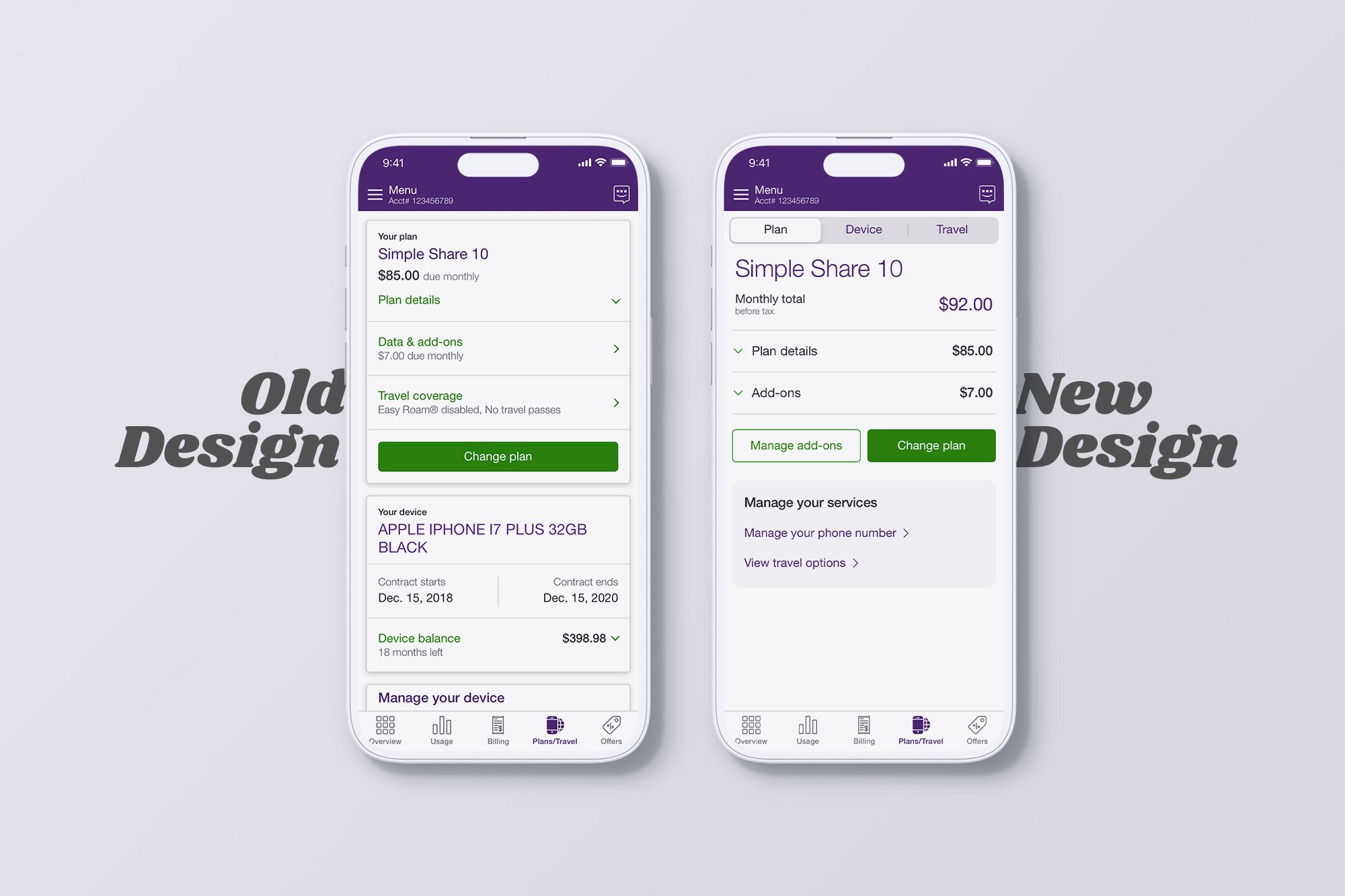
New plans screen
We refreshed the plans page to match the app's visual style and made it easier to scan what you currently have before exploring changes.
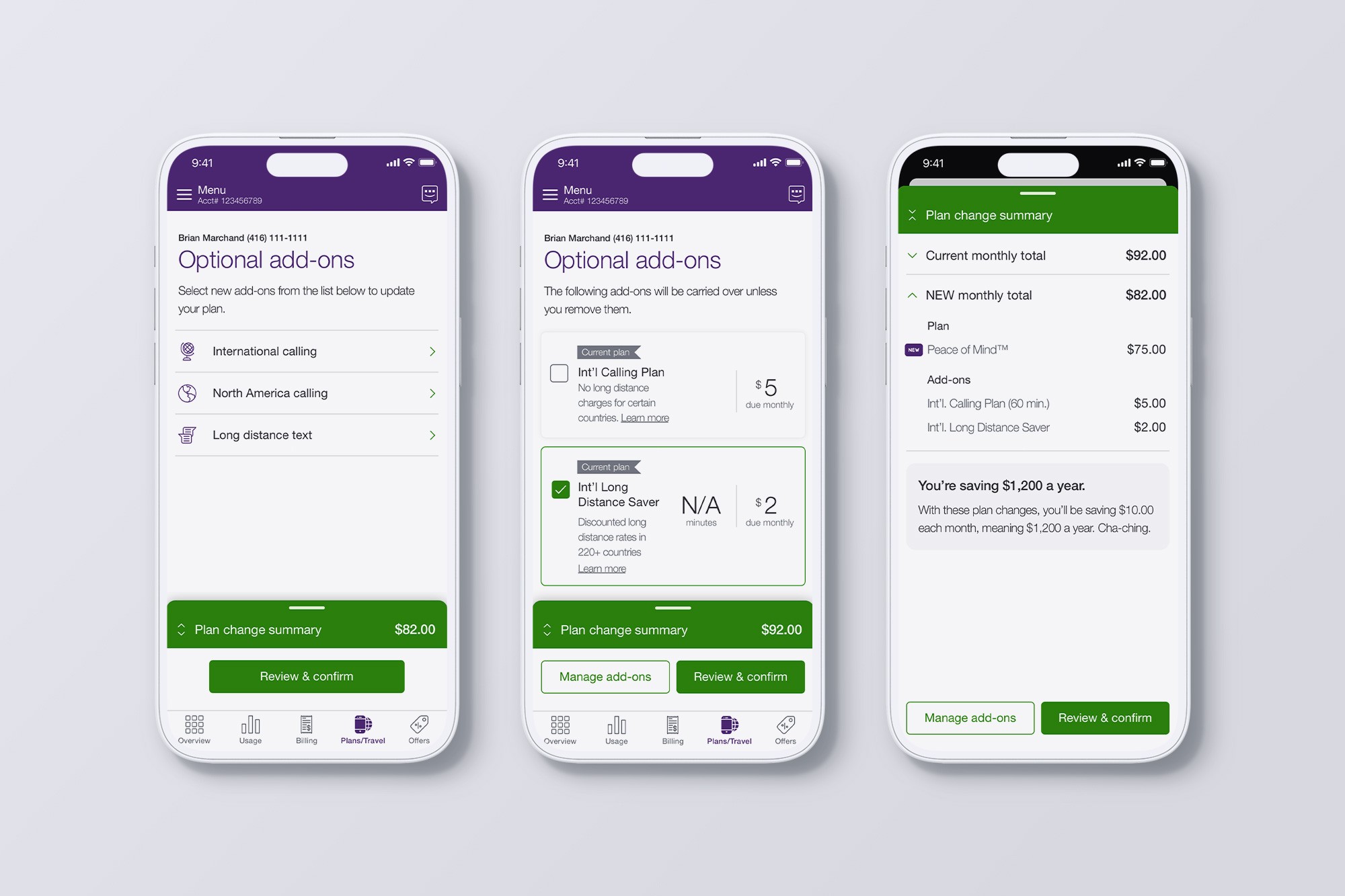
Rate plan change flow
We showed the essentials upfront with details tucked away for anyone who wanted to dig deeper. This made comparing plans much faster.
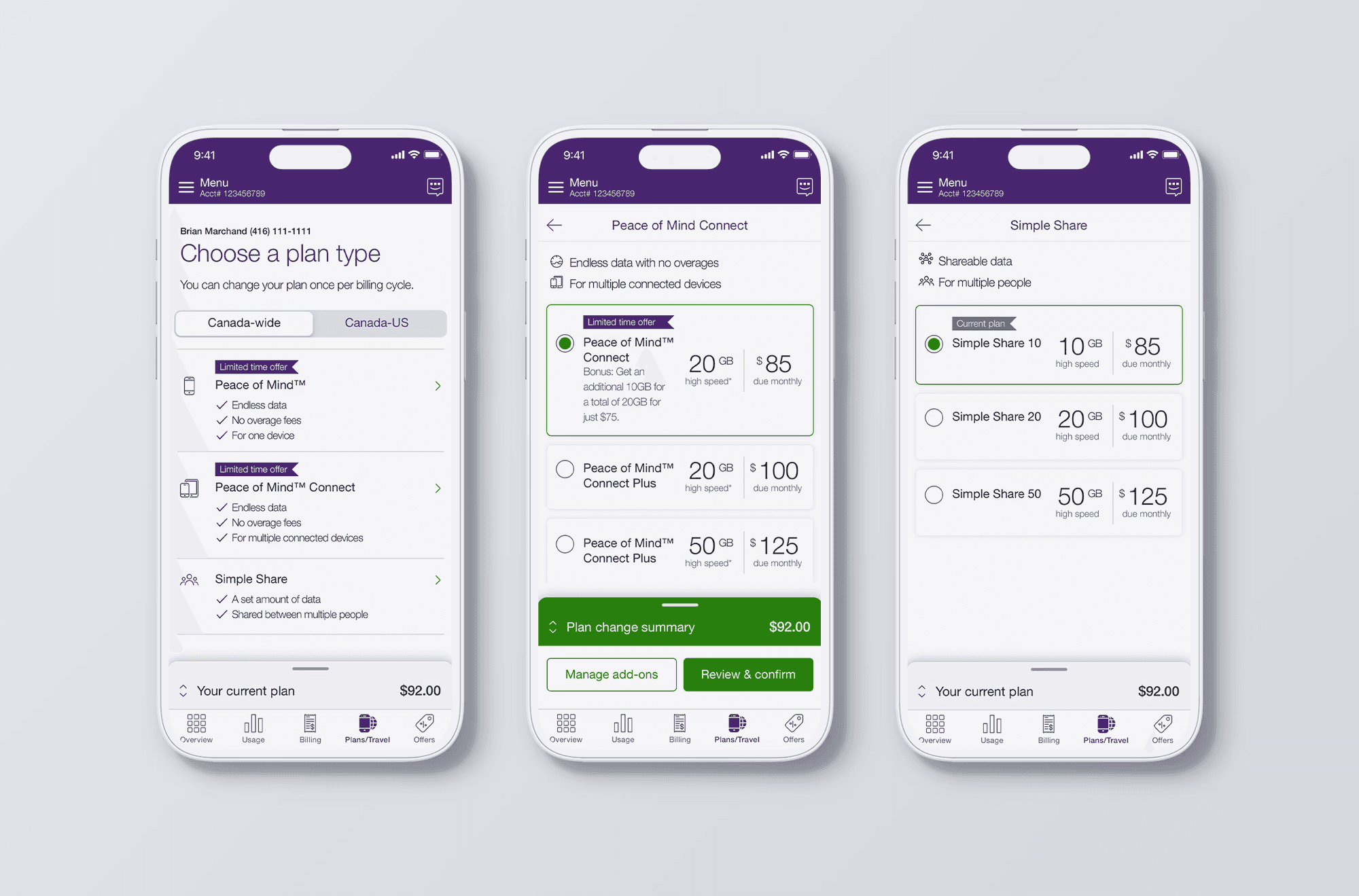
Add-ons flow and cart
We applied the same clean approach here, adding a persistent cart that showed current vs. new totals with callouts for important changes. No surprises.
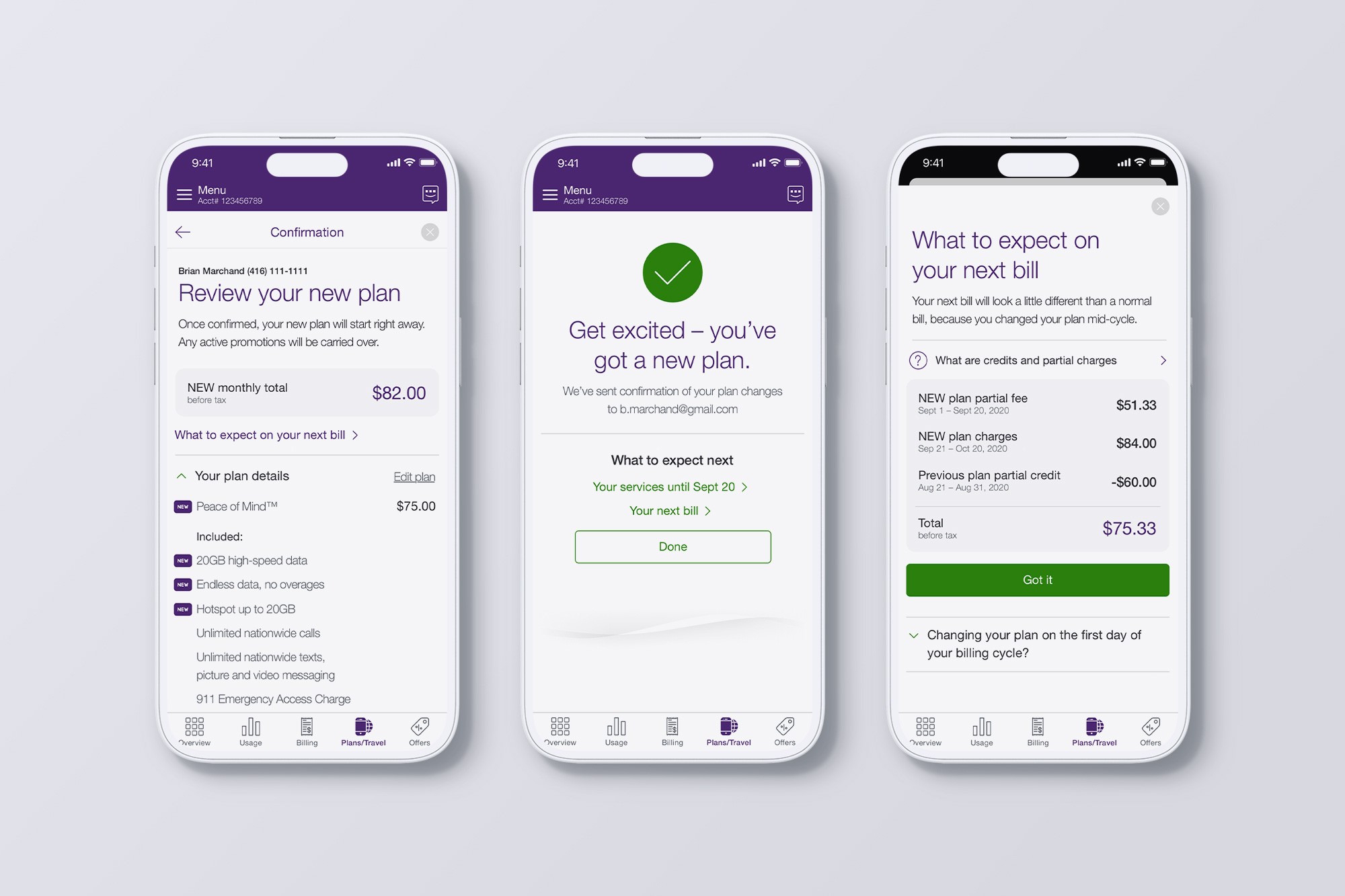
Confirmation of Selection
Before confirming, users saw a full pricing breakdown and billing adjustments. Clear expectations meant fewer confused calls to support.
What happened and what did we learn?
Over six months, we hit 22% digital adoption (almost double our goal!) and 73% user satisfaction.
Working on this project reminded me of some fundamentals I sometimes lose sight of:
Challenge your assumptions: My familiarity with the app sometimes clouded my judgment. User research kept me honest.
Plan for reality: We consistently underestimated how long research and design would take. Now I build in more buffer time for feedback and iteration.