
About the project
When COVID-19 closed all TELUS stores, customers flooded the call center for mobility renewals. Wait times skyrocketed, and people were frustrated. We needed to create a self-serve solution in the My TELUS app that could handle renewals without sacrificing the guidance customers valued from in-store and phone experiences.
Our goal was to offload 30% of renewal calls, achieve 20% pre-registration through digital channels, and hit 12% digital share of total renewals, all within 3 months.
Client
TELUS Digital
Services
User Experience, User Interface
Role
Lead Product Designer
Year
2020
What made in-store, web, and call center experiences frustrating (or helpful)?
What motivated users to renew their plans?
How did users currently navigate the app?
What information did they need to feel confident in their decision?
What did users actually like about in-store and call center interactions?
What were users' previous service providers?
What did users do when they knew renewal was coming up?
The problems we uncovered
Outdated expectations: Users still thought calling would get them special "retention plans," but those days were over. Long waits and disappointing offers left them frustrated.
Too many steps: The web experience had so many decision points that users felt overwhelmed. Most dropped off within the first two steps, especially after selecting a phone and plan.
Empty promises: The "Offers" section in the app was usually empty, disappointing users who checked it regularly.
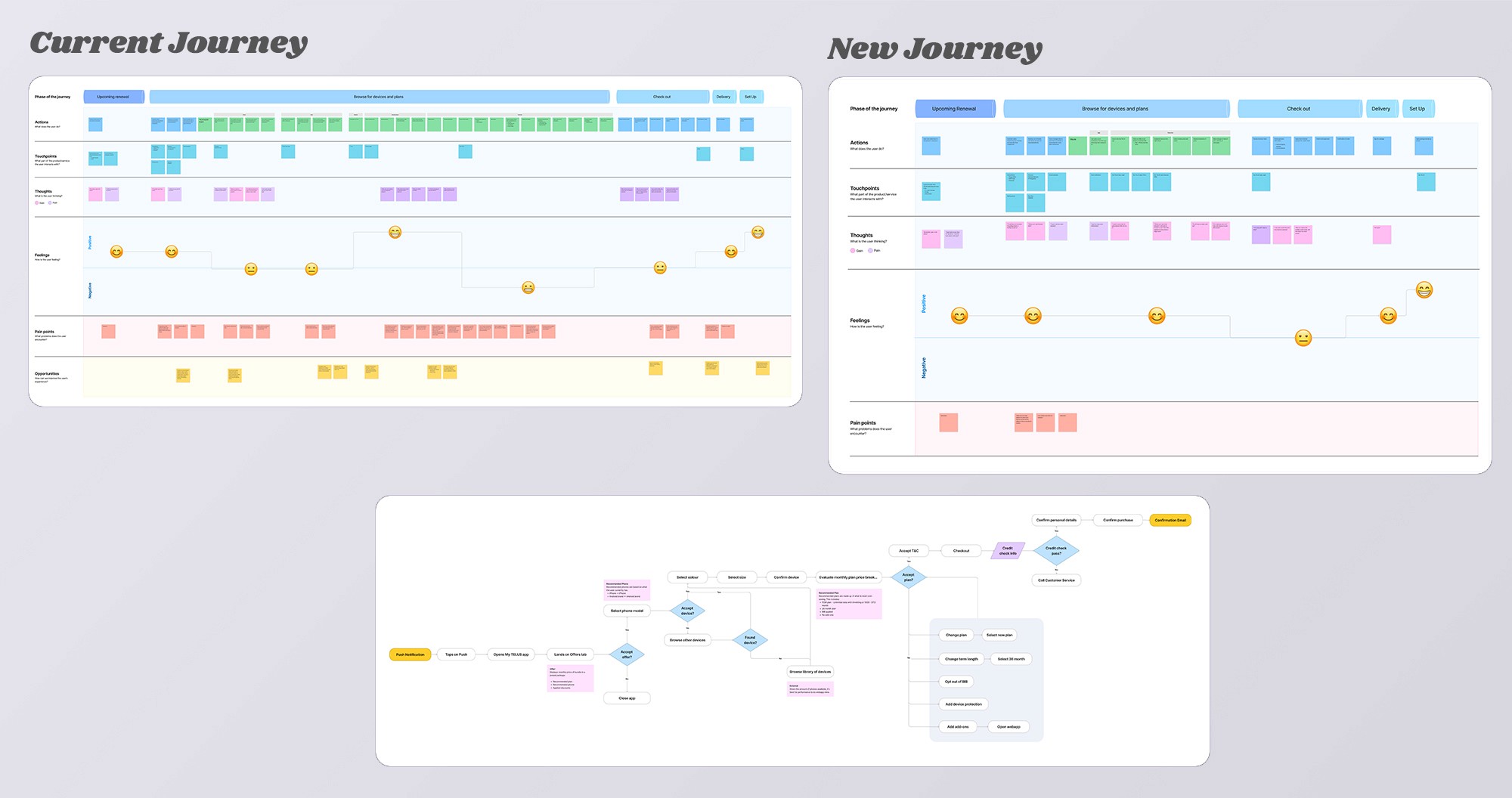
What did we learn?
Guidance matters: Users loved the personalized help they got in-store or on the phone. The guided approach made complex decisions feel manageable.
Existing customers felt ignored: The best deals always seemed targeted at new customers, making loyal users feel neglected.
Device loyalty is real: 80% of users stuck with their current operating system and just wanted the latest version of what they already had.
Cognitive overload kills conversions: Too many steps and choices caused drop-offs and decision fatigue.
Pricing bred suspicion: Unclear breakdowns around device repayment, plan combinations, and "$0 upfront" options made users distrust the whole process.
Recommend bundles based on the user's current phone and plan
Provide one clear recommendation with options to customize
Populate the "Offers" screen with actual personalized deals
Leverage new phone launches to create timely renewal offers
Send push notifications for pre-orders and updates at the right moment
Show crystal-clear pricing breakdowns at every step
We iterated quickly through wireframes and high-fidelity designs, refining constantly with cross-functional teams (including Apple's external team) through countless conversations and presentations.
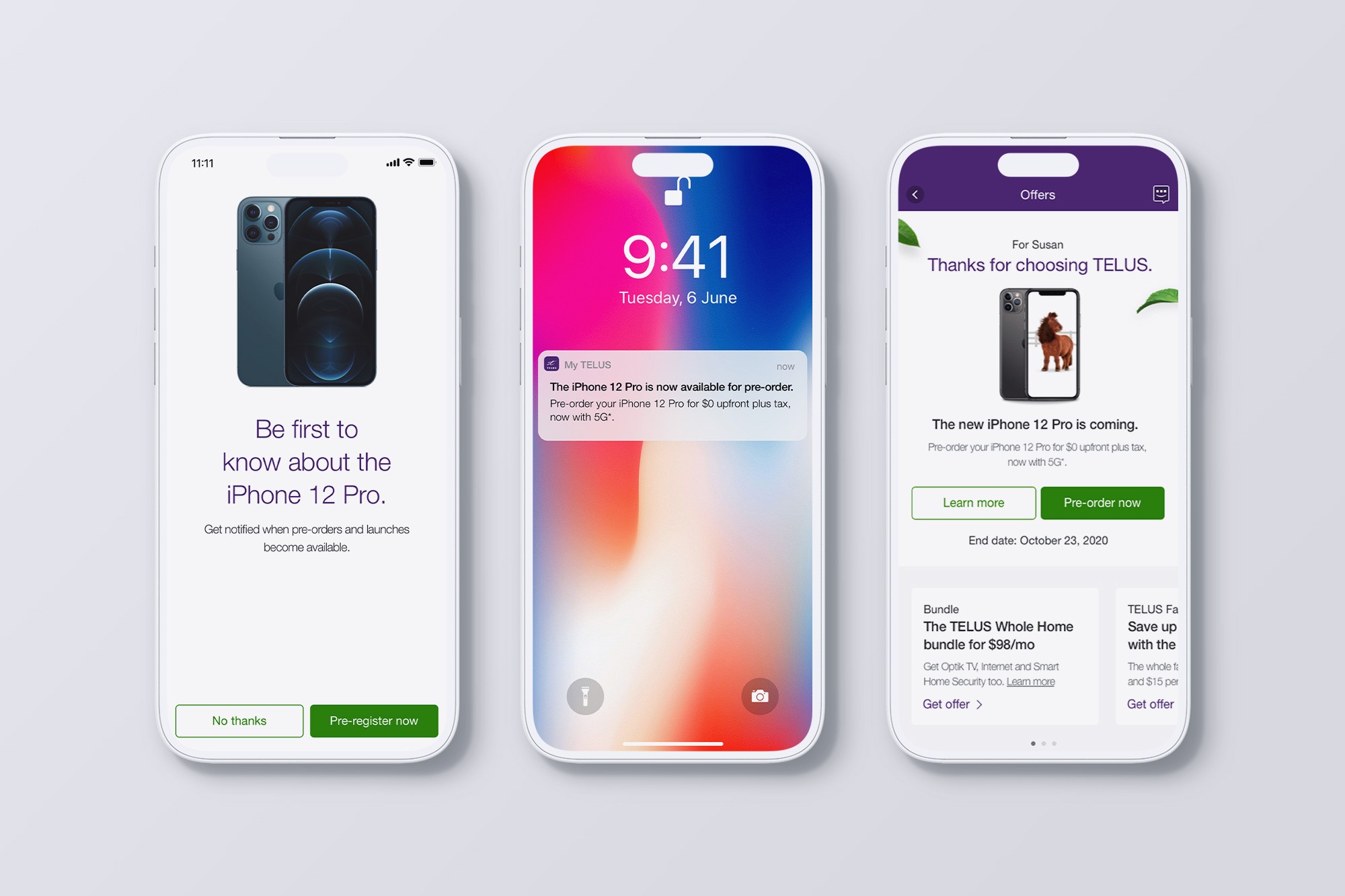
Notifications and offers
Push notifications prompted users to pre-register, then directed them to a redesigned Offers page. We structured it in tiers: personalized pre-orders, bundles, and accessory deals. Based on research, we suggested the latest version of their current device, making it feel relevant and personal.
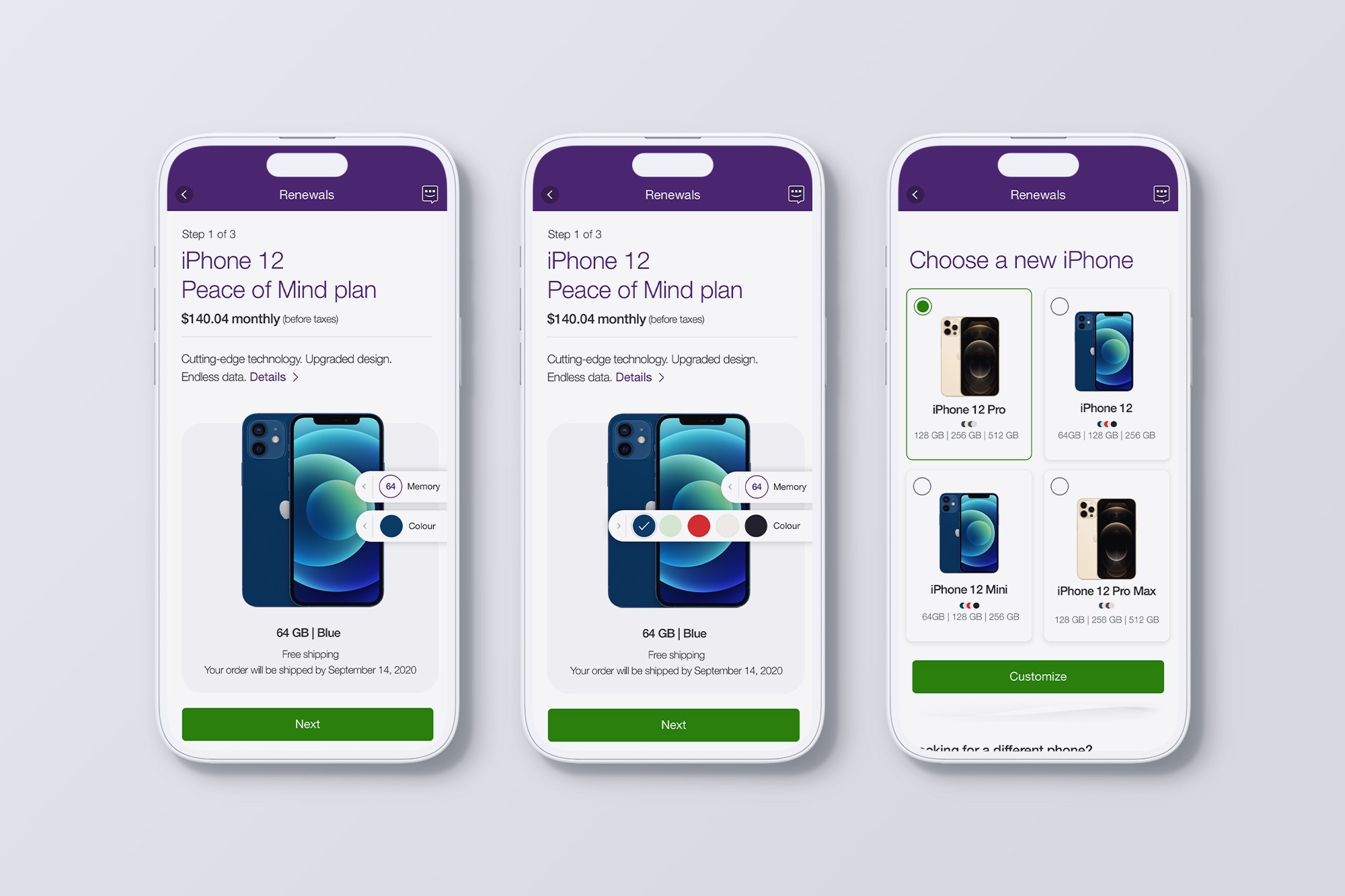
Phone and plan selection
The flow simplified decisions by suggesting the user's next logical upgrade and the most popular plan, while still allowing customization. Users could explore other options, but the guided path reduced drop-offs significantly.
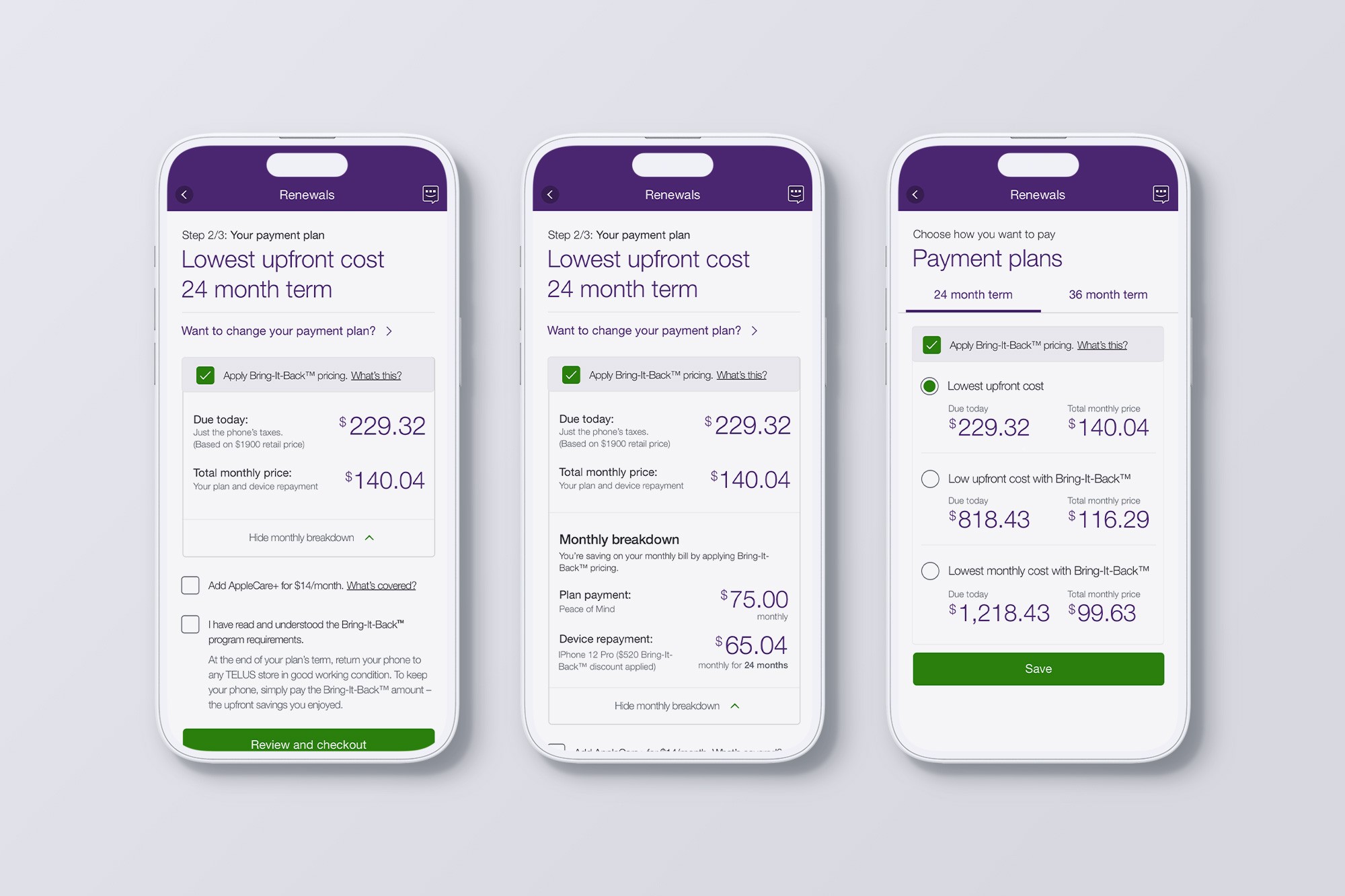
Pricing breakdown
We addressed pricing confusion head-on with clear payment details and drilldowns for specifics. The design handled variables like unpaid balances and discounts, showing monthly payments, term lengths, and upfront costs transparently. Users could see exactly how adjustments affected the price, effectively building trust and confidence.
What happened and what did we learn?
Within a month, we facilitated 200 successful renewals and hit 17% digital share—exceeding our 12% goal. Call center inquiries dropped after launch, though I left before we could measure the full annual impact.
What did I learn from this project?
Cross-functional collaboration isn't optional: Regular communication and stakeholder involvement kept this massive project on track. This reinforced that clarity and alignment from day one are essential, not nice-to-haves.
Think beyond the screen Improving the app wasn't enough. Push notifications weren't in scope initially, but advocating for them made the experience far more cohesive. The biggest wins come from looking at the whole ecosystem, not just the interface.
Launch is just the beginning: Strong initial engagement turned into drop-offs after the pricing screen when we first launched. Investigation revealed load times were the issue, not the design. Post-launch iterations fixed it, reinforcing that monitoring and adapting after launch matters just as much as getting it right initially.